


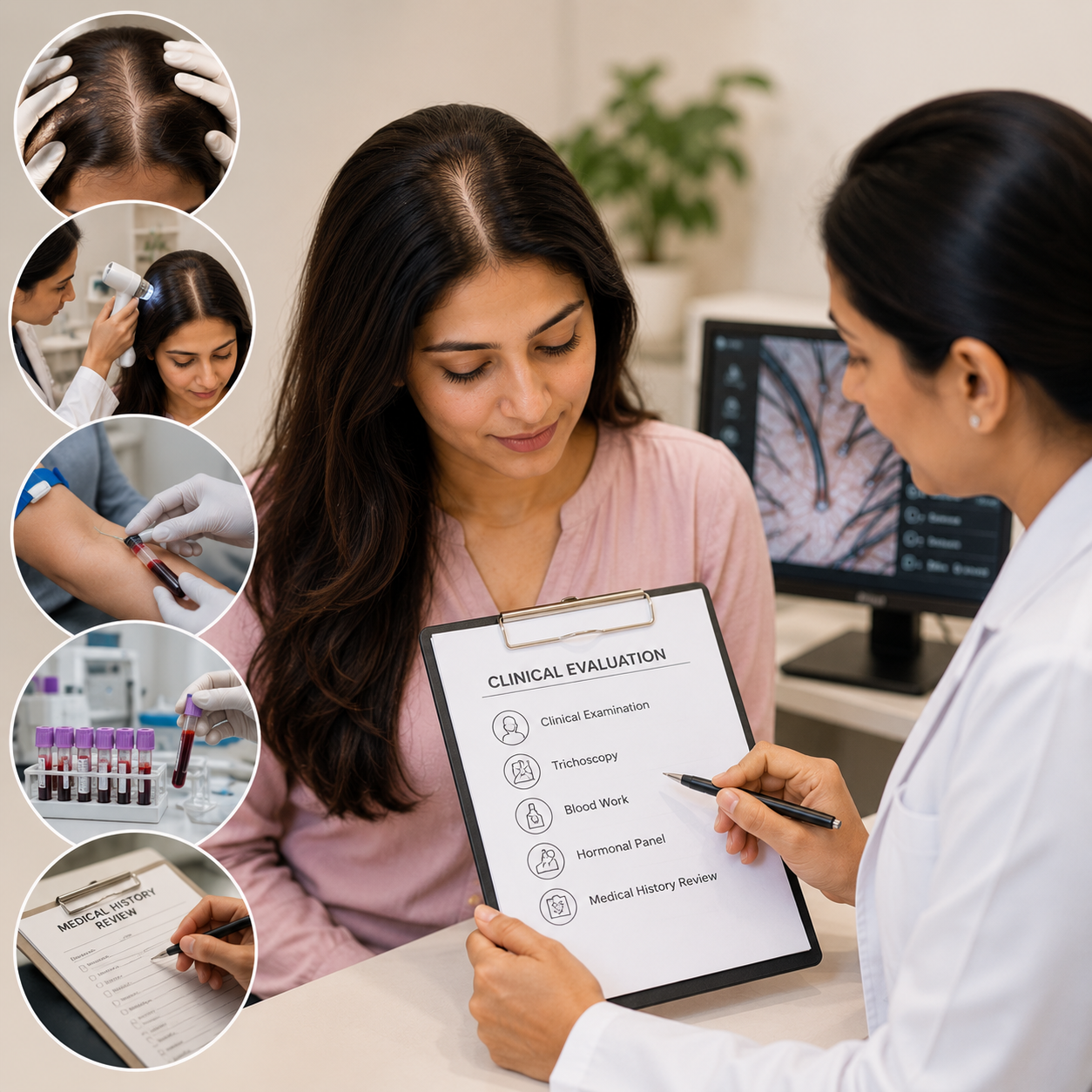
Consultation & Evaluation
full clinical examination, trichoscopy, blood work, hormonal panel, and medical history review
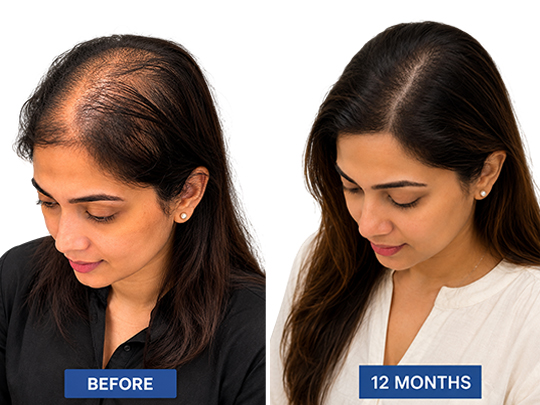
Hair loss in women doesn't get talked about enough. It's more common than most people realise and the assumption that it's only a men's issue means a lot of women suffer through it quietly, without knowing that effective, permanent solutions exist. At DMC Trichology, hair restoration for women is handled differently from the start. The evaluation goes deeper into clinical examination, trichoscopy, hormonal panels, medical history because female hair loss has more varied causes than male pattern baldness. Surgery only happens when it's genuinely the right call. The procedure uses FUE, the same minimally invasive technique used for men. The key difference is donor zone selection: softer hair from the low parietal scalp is preferred for women, giving results that blend naturally with existing hair texture and wave. Clinics are in Vasant Vihar (South Delhi) and Rajouri Garden (West Delhi).

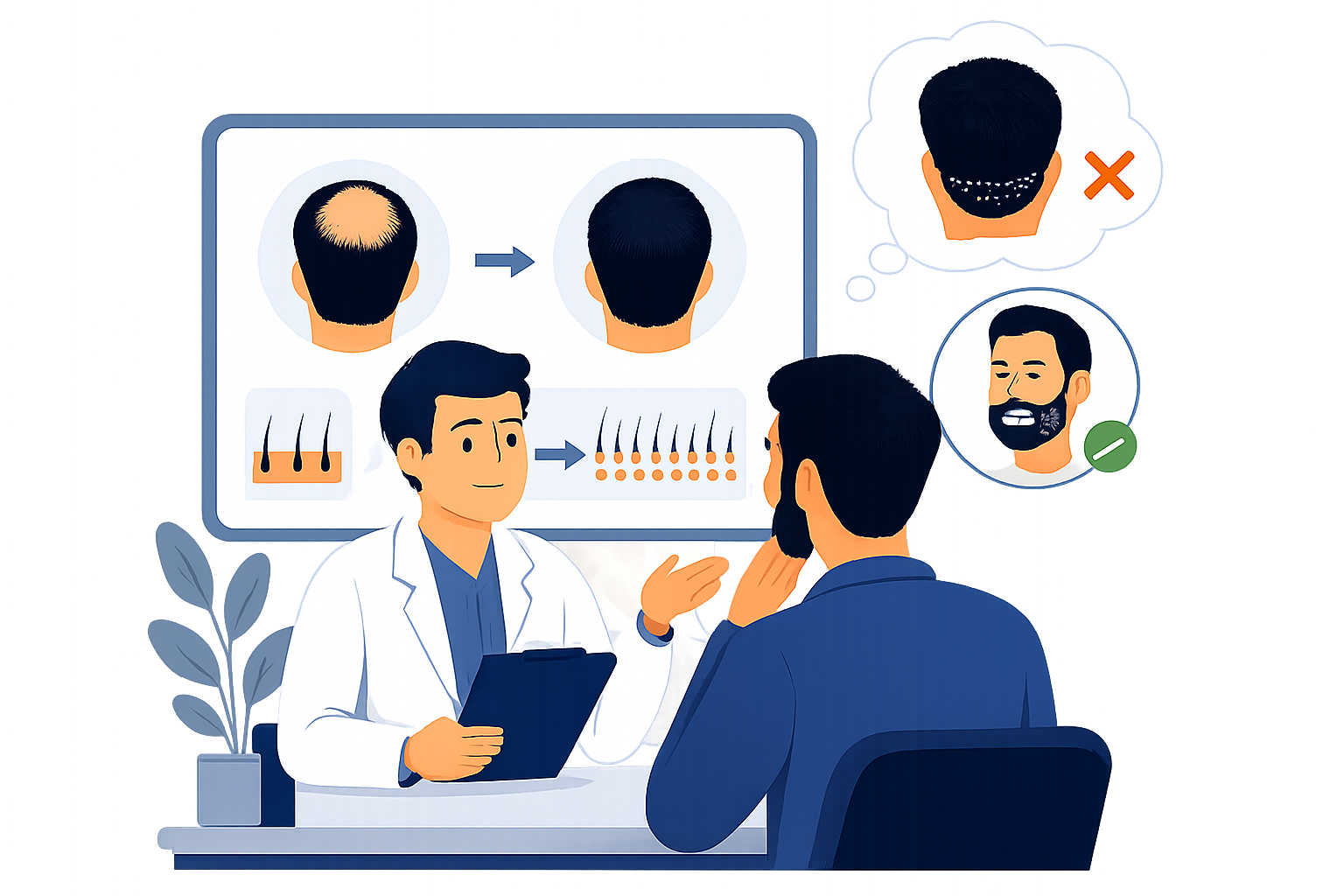
Female hair transplant is most suitable for Grade 3–4 hair loss, whereas Grade 1–2 cases often benefit from non-surgical treatment first, and Grade 5 baldness is generally not considered an ideal candidate for transplantation.
Book a free online consultationfull clinical examination, trichoscopy, blood work, hormonal panel, and medical history review
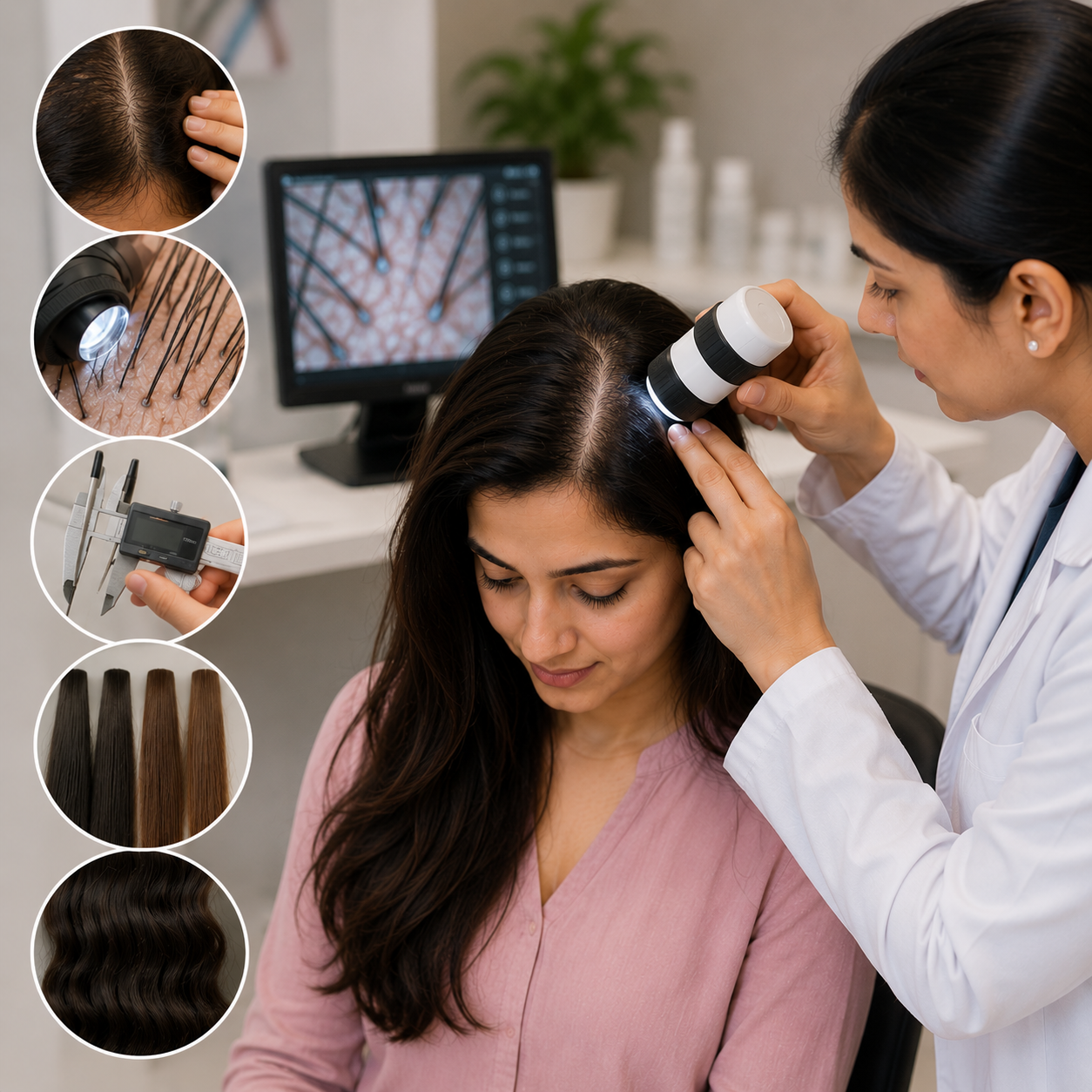
follicular unit density, shaft diameter, texture, colour, and wave at the low parietal scalp are all assessed
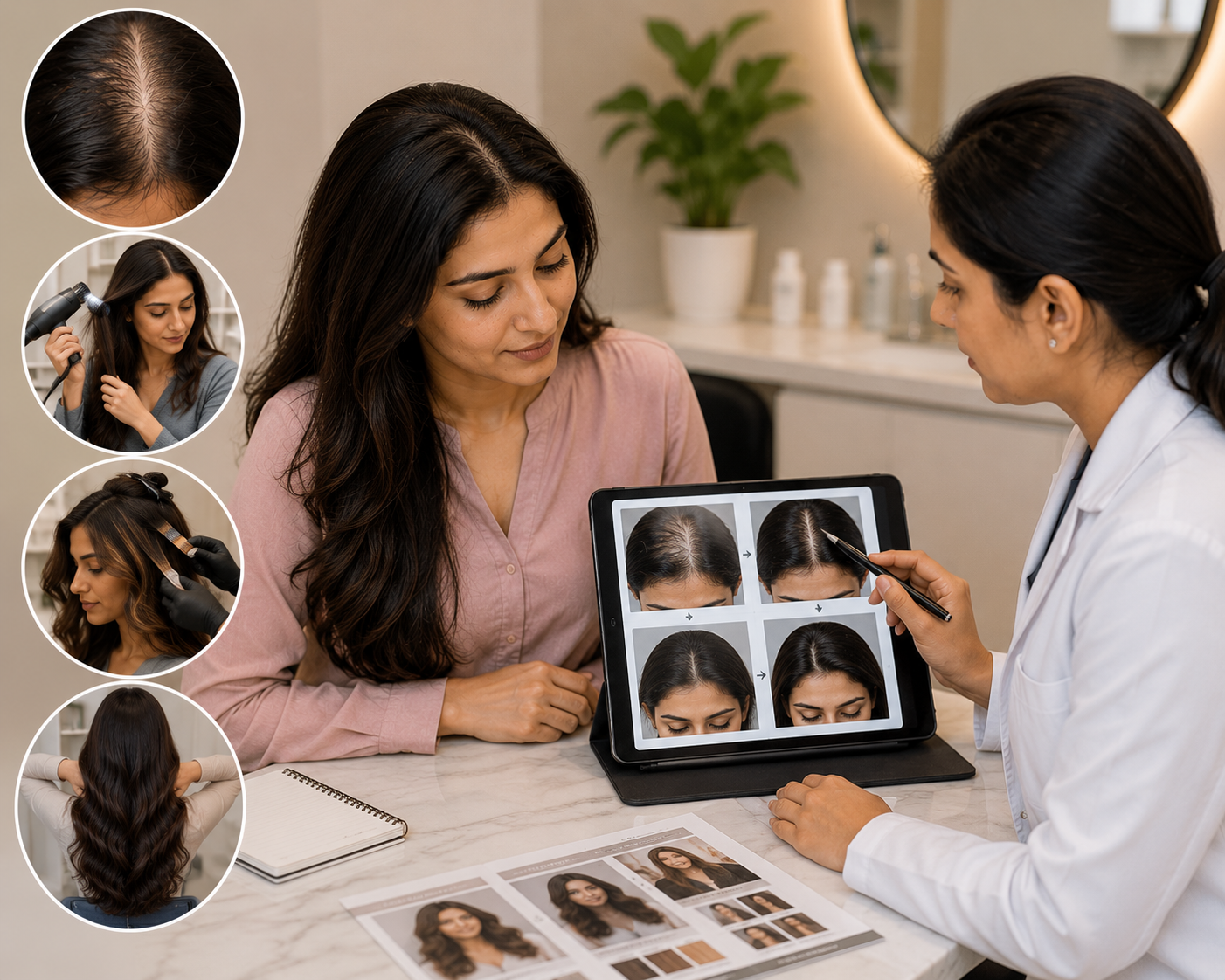
a realistic conversation about post-surgical density, styling options, colouring, and long-term management
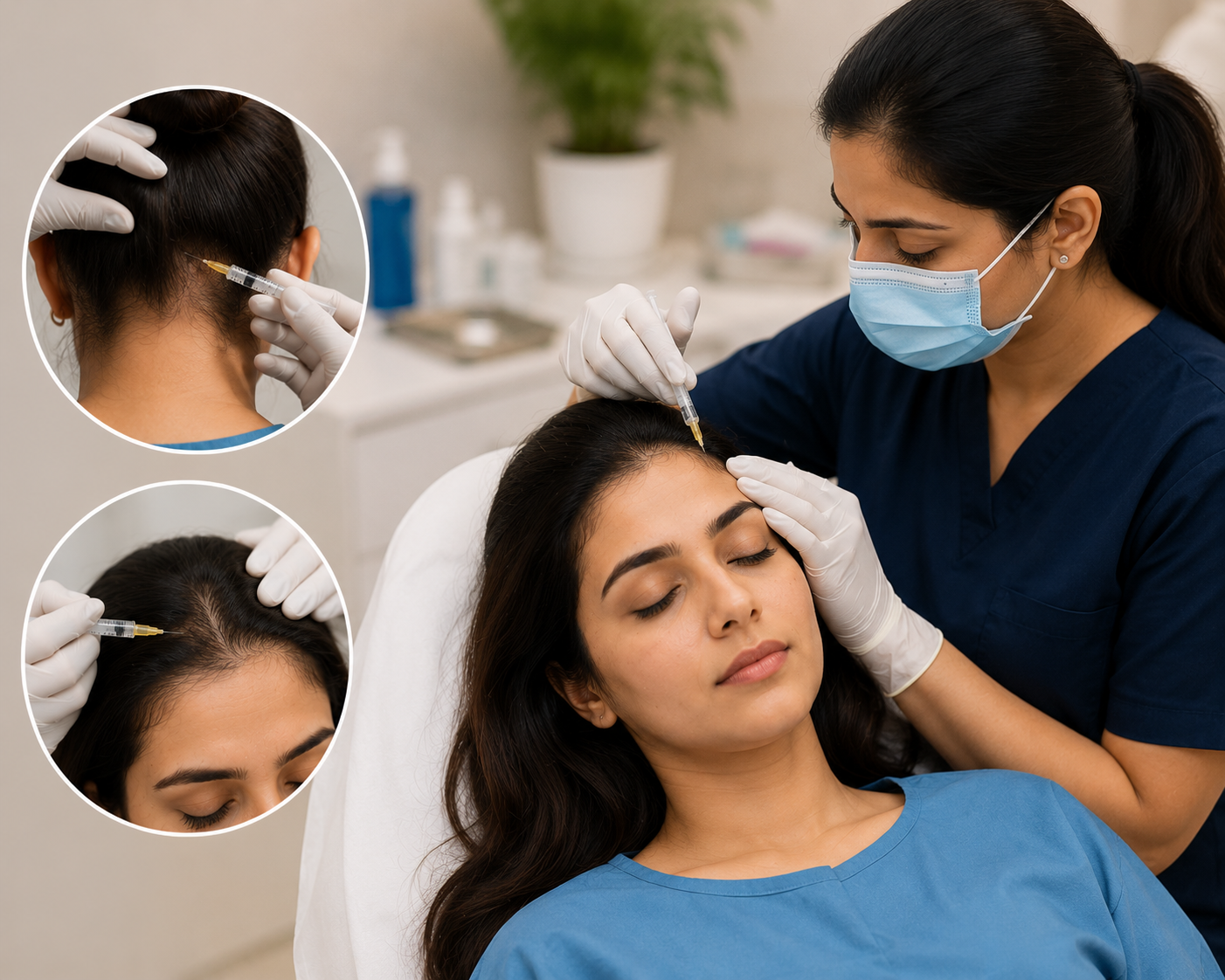
local anaesthesia applied to both donor and recipient areas
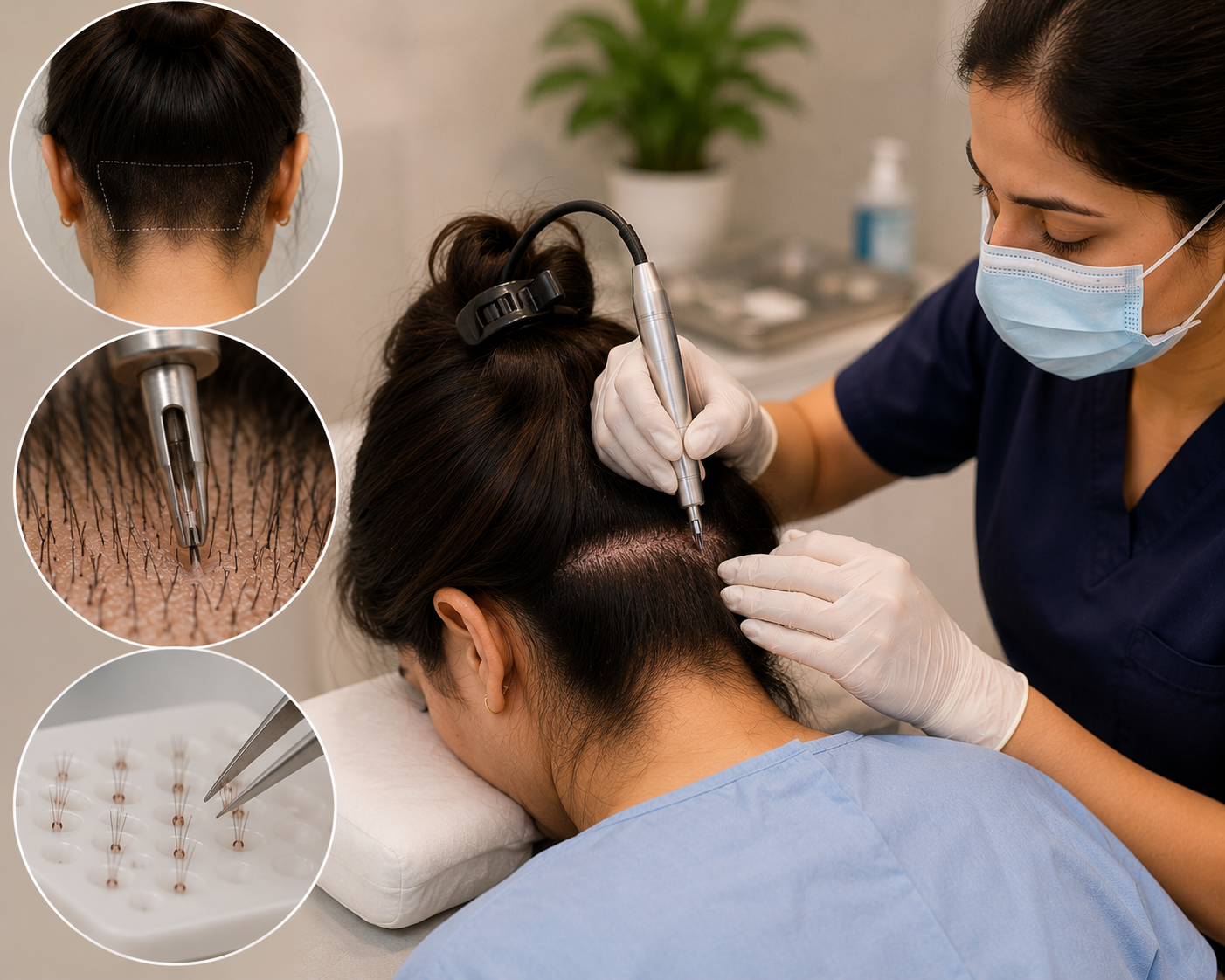
softer hair grafts taken individually from the low parietal scalp donor zone
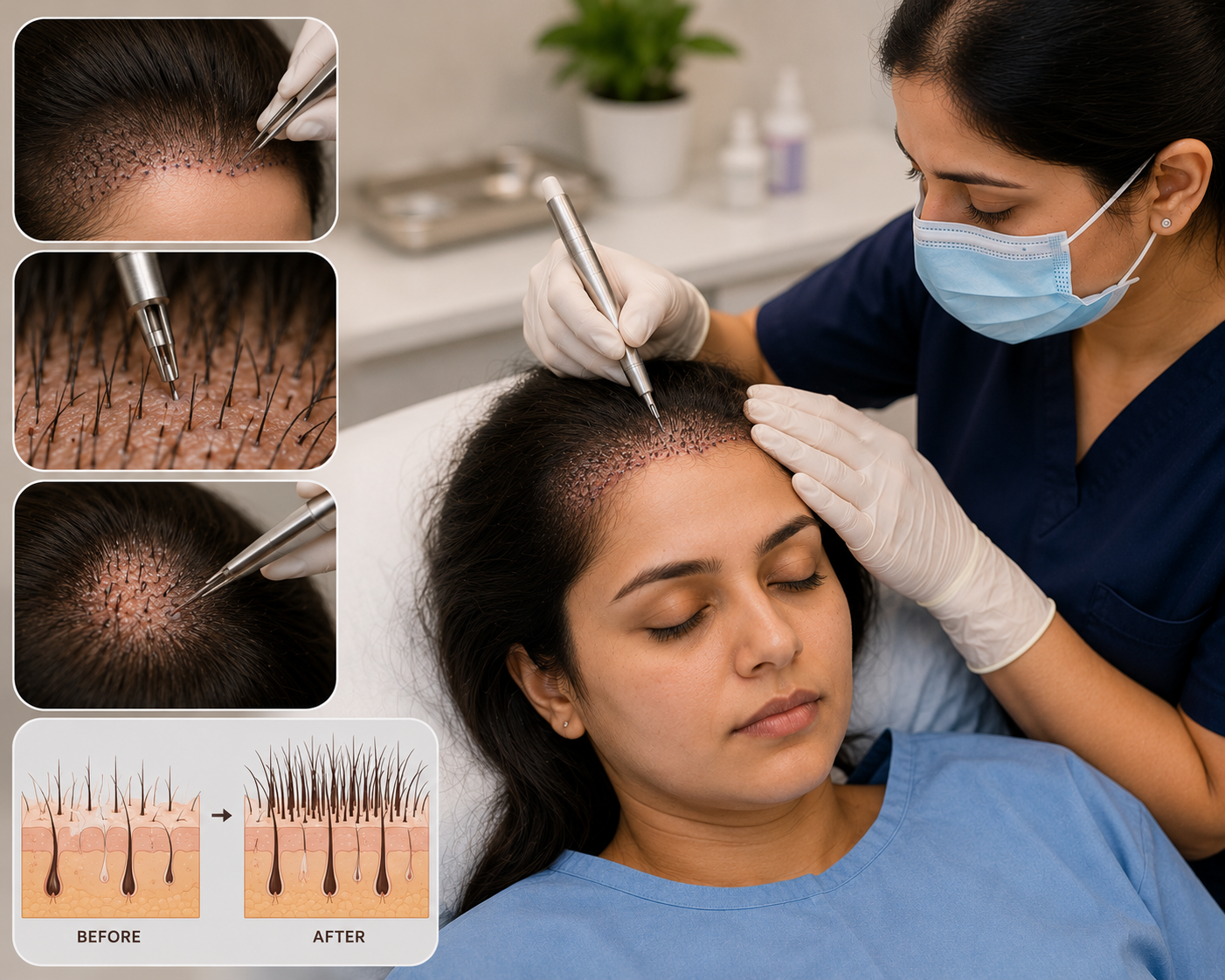
grafts placed at the correct angle and density to restore the hairline and crown
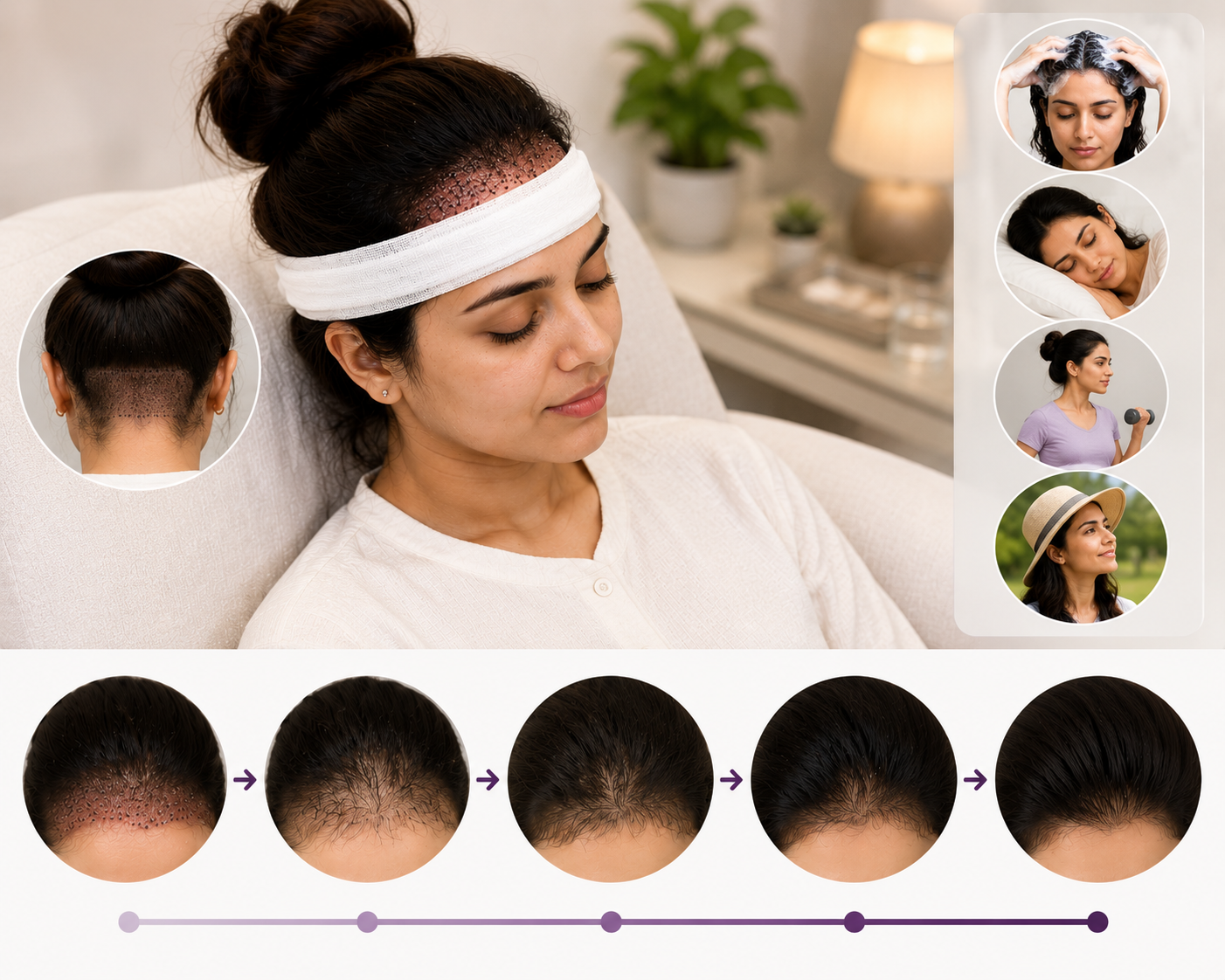
minimal downtime; initial shedding is normal, new growth typically starts at 4–6 months
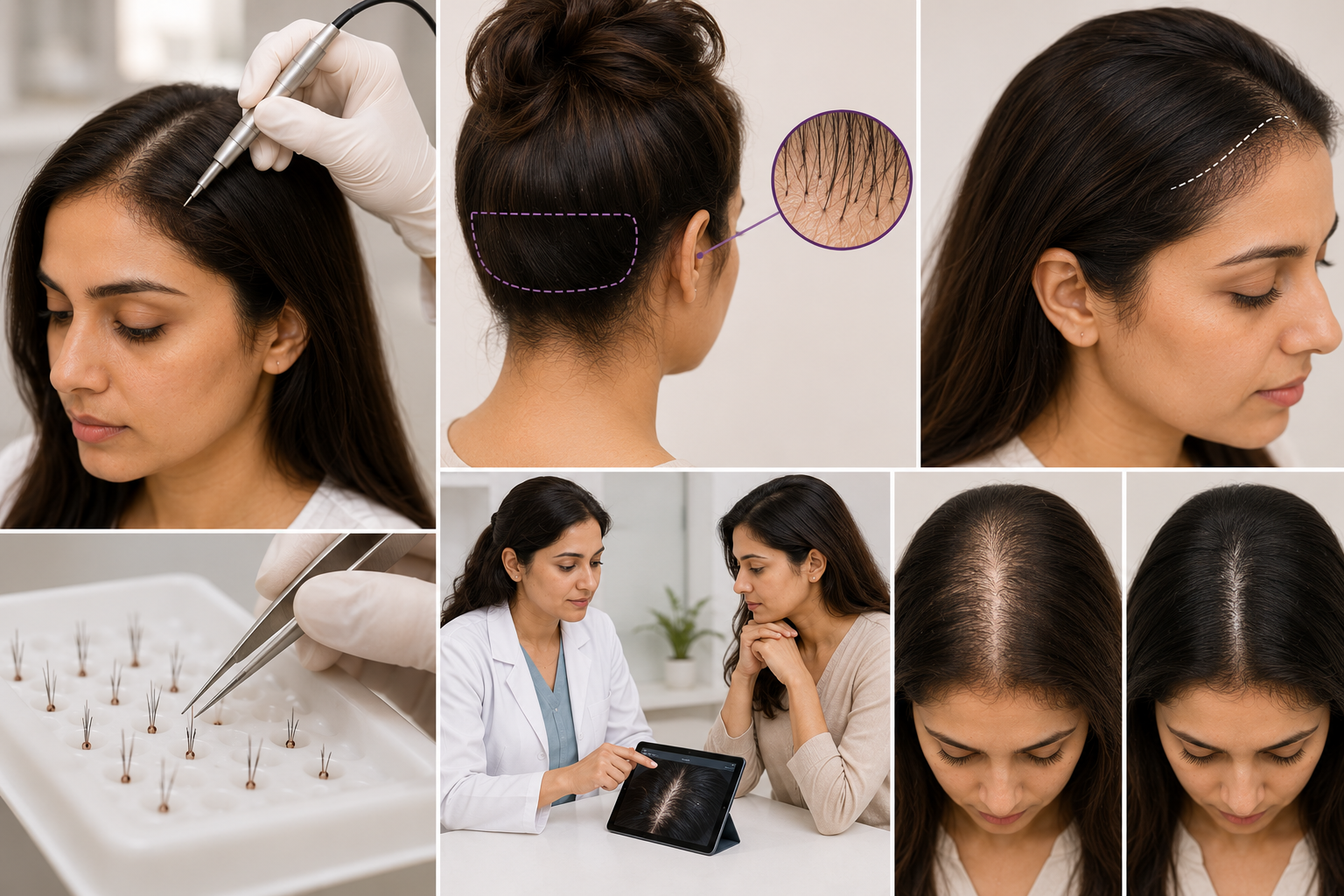
FUE is the only method used at DMC Trichology for women's hair transplants, no strip cutting, no linear scars. For women specifically, the donor zone focus shifts away from the occipital area (standard in men) toward the low parietal scalp, where hair texture is softer and a closer match to frontal and crown hair.
Pre-surgical evaluation for women is more involved than for men. Hormonal status, lifestyle factors, and underlying medical conditions all play a role in confirming whether surgery is appropriate and likely to deliver lasting results.
Physical discomfort affects daily life and overall wellbeing. At our physiotherapy center, we help you overcome pain, improve mobility, and restore body function through professional care and guidance.
No. In most cases, only a small section of the donor area needs trimming. The surrounding hair stays long enough to cover it throughout recovery; most people can't tell anything was done.
The technique is FUE in both cases, but almost everything else differs. Donor zone, graft texture preference, hairline design, and pre-surgical evaluation are all adapted specifically for women
Grades 3 and 4 are the primary candidates. Grades 1 and 2 respond better to non-surgical treatments. Grade 5 is generally not suitable for surgical intervention.
Yes. Grafts are taken from DHT-resistant zones, so transplanted hair retains its growth characteristics permanently.
Most women are back to their regular routine within a few days. The transplanted hair sheds initially this is completely normal and expected. Permanent new growth starts around 4–6 months, with full results visible by 12 months.